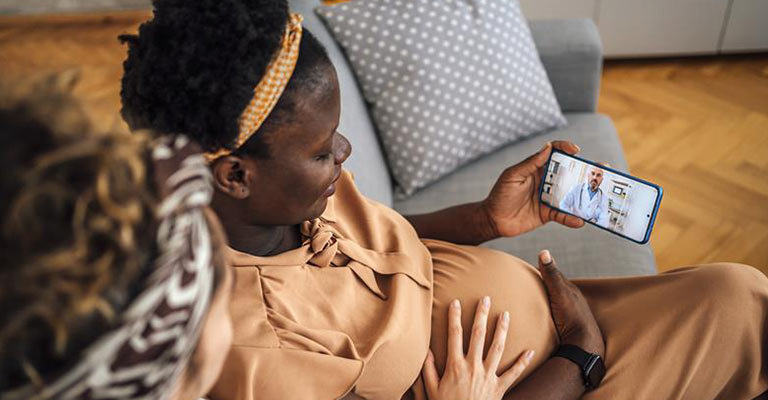
Healthcare is getting smarter.
AI is transforming how care is delivered, helping analyze data, identify patterns, and guide decision-making in ways that weren’t possible just a few years ago. In women’s and family health, these technologies promise earlier insights, more personalized recommendations, and more connected experiences across fertility, pregnancy, parenting, and menopause.
That progress is meaningful. But it also raises an important question: as healthcare becomes more intelligent, is it also becoming more effective for the people it serves?
Because in women’s and family health, tech alone isn’t enough. It doesn’t account for what it feels like to navigate a pregnancy loss, to have symptoms dismissed for years, or to face the uncertainty and isolation when trying to conceive shifts from something expected to something uncertain.
Women’s health isn’t a point solution
Women’s and family health spans years, often decades, of evolving needs. From fertility and pregnancy to parenting and menopause, these aren’t isolated clinical events. They’re interconnected experiences that require coordination, continuity, and support over time.
For example, a fertility journey doesn’t end with a positive pregnancy test. It can carry into high-risk pregnancy care, postpartum recovery, and even long-term health considerations. Similarly, symptoms dismissed earlier in life can resurface later as more complex conditions, requiring a deeper understanding of a person’s history.
The complexity behind the clinical and emotional decisions people are making at each stage is best met with both tech and human-centered support.
When benefits treat these stages as separate events rather than a continuous journey, it can lead to missed risk signals, more reactive care, and a more fragmented member experience.
Where AI excels—and where human-centered care matters most
AI is improving access to information and helping streamline care. It can surface insights, identify patterns, and suggest the next best actions grounded in clinical guidelines and member-specific context. And while it certainly unlocks meaningful new capabilities and reach, it’s best done in connection with human expertise, care, and support.
1. Context
AI is great at recommending next steps based on data, surfacing signals, and suggesting the next best actions grounded in clinical guidelines and member-specific context. These recommendations are most effective when they’re interpreted and applied within the context of each individual’s needs.
Human expertise is critical to fully extend support and understand context—why someone may hesitate, what constraints they’re facing, or how personal, financial, and cultural factors shape decisions.
In women’s and family health, context directly impacts outcomes, and translating insights into the right action requires both technology and expert guidance.
2. Trust
Decisions across fertility, pregnancy, and menopause are complex and deeply personal. Trust isn’t built through recommendations alone. It’s built through consistent, informed guidance and the ability to ask questions, validate concerns, and make decisions with confidence.
3. Advocacy
AI is able to guide someone through options and surface the right next steps, and translating those insights into the right decisions and actions often requires an additional layer of advocacy and support.
In high-stakes moments, support is best when it can extend beyond direction to active guidance and advocacy.
Navigation is only part of the solution
AI has made it easier to navigate healthcare, helping people find providers, understand options, and move through the system more efficiently. That matters. But navigation alone doesn’t ensure better outcomes or better experiences.
Knowing where to go doesn’t mean someone feels confident in what to do next, especially when decisions are complex or emotionally charged. That’s where human support becomes essential—bridging the gap between insight and action.
The limitations of a purely digital model
As healthcare becomes more technology-driven, care is often treated as a coordination problem. How does women’s and family health best fit into these workflows? How are we creating the right workflows and environments for women’s health to thrive?
When care becomes too transactional, context can be overlooked, decisions can become oversimplified, and member experience can suffer.
Engagement alone isn’t a proxy for outcomes. Care models need to be designed to support both. Because no model can predict what matters most to a person in that moment.
AI works best when it supports care
AI has a clear role to play in improving women’s and family health. It can help identify risks earlier, streamline access to care, and surface insights that improve decision-making. Used well, it can make care more efficient, more personalized, and more scalable.
When applied thoughtfully, AI is able to surface signals earlier and anticipate member needs, enabling more proactive, anticipatory, and personalized care across the member journey. This creates an opportunity not just for better coordination, but for earlier intervention and stronger outcomes.
This also reduces the inefficiencies and added costs that often come from fragmented, point-solution approaches. Its value is maximized when it supports a broader care model, not when it replaces it.
The most effective approach combines technology with human-centered care:
- Continuous relationships: Dedicated support that understands the full member journey and provides continuity across life stages
- Integrated guidance: Clinical, emotional, and practical needs addressed together, not in isolation
- Active support and advocacy: Helping members navigate decisions, interpret care, and access the right resources at the right time
This allows care teams to focus on higher-value, human-led support—guiding decisions, building trust, and supporting members through complex moments.
In this model, technology enhances care delivery and frees clinical experts and care advocates to focus on what matters most: supporting the person behind the data.
The bottom line
AI will continue to play a growing role in healthcare, and in women’s and family health, better technology works best when paired with the right support. Because the most important question isn’t just, “What’s the next step?” It’s also, “Is there the right support in place to help someone take it?”
At Progyny, we believe the future of women’s and family health is both intelligent and deeply human, where technology helps anticipate needs, and people provide the context, trust, and advocacy that turn insight into meaningful outcomes.
To learn more about how Progyny supports women’s and family health, connect with our team.