Updated by the Progyny Editorial Team and reviewed by the Progyny Clinical Team — December 2025.
During a typical menstrual cycle, your ovaries release hormones — primarily estrogen and progesterone — that cause the endometrium (uterine lining) to thicken in preparation for pregnancy. If pregnancy does not occur, hormone levels fall and the endometrium sheds during your period.
With endometriosis, tissue similar to the endometrium grows outside the uterus. These tissues are mostly found in the pelvis, including on the ovaries, fallopian tubes, outer surface of the uterus, ligaments that support the uterus, bladder, bowel, and the lining of the pelvic cavity.
Healthcare providers may refer to these areas as lesions, implants, or nodules. When similar tissue grows within the muscular wall of the uterus, it is called adenomyosis. These growths are almost always benign, meaning they are not cancer.
Like the uterine lining, endometriosis tissue responds to monthly hormone changes. It can thicken and break down, but unlike menstrual blood, the resulting bleeding has no way to leave the body. This can trigger inflammation, pain, and scar tissue, which may affect nearby organs and fertility over time.
Symptoms you may notice
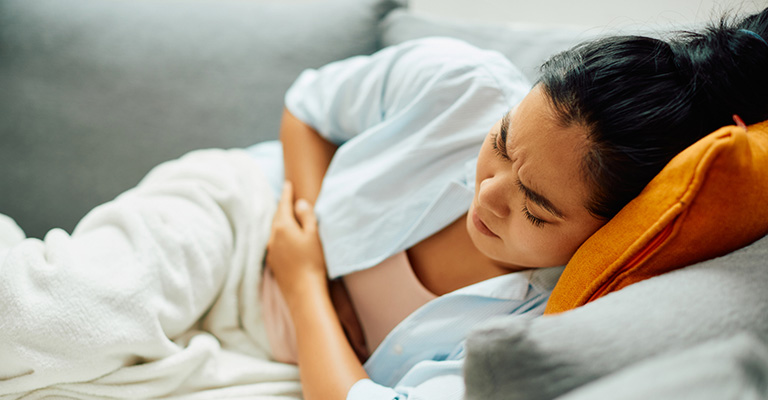
Symptoms of endometriosis can range from mild to severe, and some people have no symptoms at all. Pain is the most common symptom and may occur at any time.
You may experience:
- Pain during periods, including severe cramping
- Pain during or after sex
- Chronic pelvic or lower back pain
- Abdominal or intestinal pain
- Digestive symptoms, especially during periods, such as bloating, constipation, diarrhea, or nausea
- Heavy menstrual periods
- Spotting or bleeding between periods
- Fatigue
- Brain fog
- Urinary symptoms
- Difficulty getting pregnant
Where endometriosis can be found
Endometriosis most often affects pelvic organs, including:
- Ovaries
- Fallopian tubes
- Outer surface of the uterus
- Ligaments that support the uterus
- Bladder
- Bowel and intestines
In some cases, endometriosis may also be found outside the pelvis.
Why endometriosis can be painful
Just as the uterine lining sheds and bleeds each month during your period, endometriosis tissue can also bleed. Because this blood cannot exit the body, it can cause swelling and inflammation.
Over time, repeated inflammation may lead to ovarian cysts (endometriomas), adhesions, and scar tissue. Scar tissue can change pelvic anatomy, restrict organ movement, and block fallopian tubes, contributing to ongoing pain and fertility challenges.
Diagnoses
Endometriosis affects about 10% of people with uteruses worldwide who are of reproductive age. If someone in your family has it, you’re 7 to 10 times more likely to develop it yourself.
Your healthcare provider may use a combination of pelvic exams and imaging tests, such as ultrasound or MRI.
Currently, laparoscopy is the only way to definitively confirm endometriosis and determine its severity. Laparoscopy is a minimally invasive surgical procedure that allows a surgeon to look inside the pelvis and identify endometriosis tissue, which is often confirmed with a biopsy.
Stages
Endometriosis is sometimes grouped into stages based on what a surgeon sees during a minimally invasive procedure. These stages describe the location and extent of endometriosis tissue, not how severe symptoms feel. People with a low stage can have significant pain, while others with a high stage may have few symptoms. Because of this, staging is only one piece of information and does not determine treatment or fertility outcomes on its own.
Treatment options
Endometriosis can be managed medically, surgically, or with a combination of approaches. Treatment depends on your symptoms, goals, and whether you are trying to conceive.
Common treatment options include:
- Pain relief medications, such as ibuprofen or naproxen, for mild symptoms
- Hormonal birth control, which can suppress ovulation and slow the growth of endometriosis tissue
- Gonadotropin-releasing hormone agonists, which reduce estrogen production and temporarily stop endometriosis growth
- Laparoscopic surgery to remove or reduce endometriosis lesions and cysts
How it affects fertility
Many people with endometriosis are still able to conceive, especially those with mild to moderate disease. Fertility challenges are more common with more severe endometriosis, though the exact reasons are not fully understood.
Endometriosis may affect fertility by:
- Causing scar tissue that interferes with egg pickup or transport through the fallopian tubes
- Triggering inflammation that may affect egg quality or embryo implantation
- Leading to ovarian cysts that can impact ovarian reserve
Some treatments used to manage endometriosis symptoms, such as hormonal therapies, also prevent pregnancy while you are using them.
Successful pregnancy is possible
Although endometriosis can complicate becoming pregnant, many people with endometriosis go on to have successful pregnancies. If you have been diagnosed with endometriosis and want to build your family, a reproductive endocrinologist can help you understand your options and create a plan that supports your goals.
Progyny is here for you, too. Please contact your Progyny Care Advocate for support.
Disclaimer: The information provided by Progyny is for educational purposes only and is not medical advice. Always consult a qualified healthcare provider for medical guidance.