

Written by the Progyny Editorial Team. Reviewed by the Progyny Clinical Team — November 2025.
Carbohydrate (carb) counting is a tool to help you reach your blood sugar goals. It’s a way to measure how many grams of carbohydrates are in your food and drink, so you can understand how different foods change your blood sugar.
Why count carbs?
Your blood sugar changes the most after eating meals high in carbohydrates. Each food has a different amount of carbs. How much you eat (portion size) will also lower or raise the number of carbs in that meal.
Eating different amounts of carbs at each meal can lead to wide swings in blood sugar. That can be frustrating. It can also make it hard to know which foods cause higher readings and which ones help keep you on target.
Your goal: eat the same amount of carbohydrates at each meal. This helps keep your blood sugar steady and lets you see how your blood sugar responds to different foods.
Along with carb counting, you can use your blood sugar readings to adjust the amount of carbs you eat. Using these two skills together is a great way to meet your blood sugar goals. Your diabetes educator or doctor will be able to walk you through it.
How many carbs should I eat?
The Association of Diabetes Care and Education Specialists recommends most people with gestational diabetes aim for the following amounts of carbohydrates at their meals and snacks.
| Meal | Carbohydrate amount |
|---|---|
| Breakfast | 15 to 45 grams |
| Lunch and dinner | 45 to 75 grams |
| Snacks | 15 to 45 grams |
These are general recommendations, so ask your doctor or diabetes educator how many carbs you should aim for.
Not all foods have carbohydrates. Healthy eating for gestational diabetes can give you a refresher on which foods do and don’t have carbs.
How to count carbs
Nutrition labels are a great tool for counting carbs. But there’s a catch: the serving size might not be the same as your portion size (what you actually ate). You’ll need to do a little math.
Let’s practice together using this nutrition label:
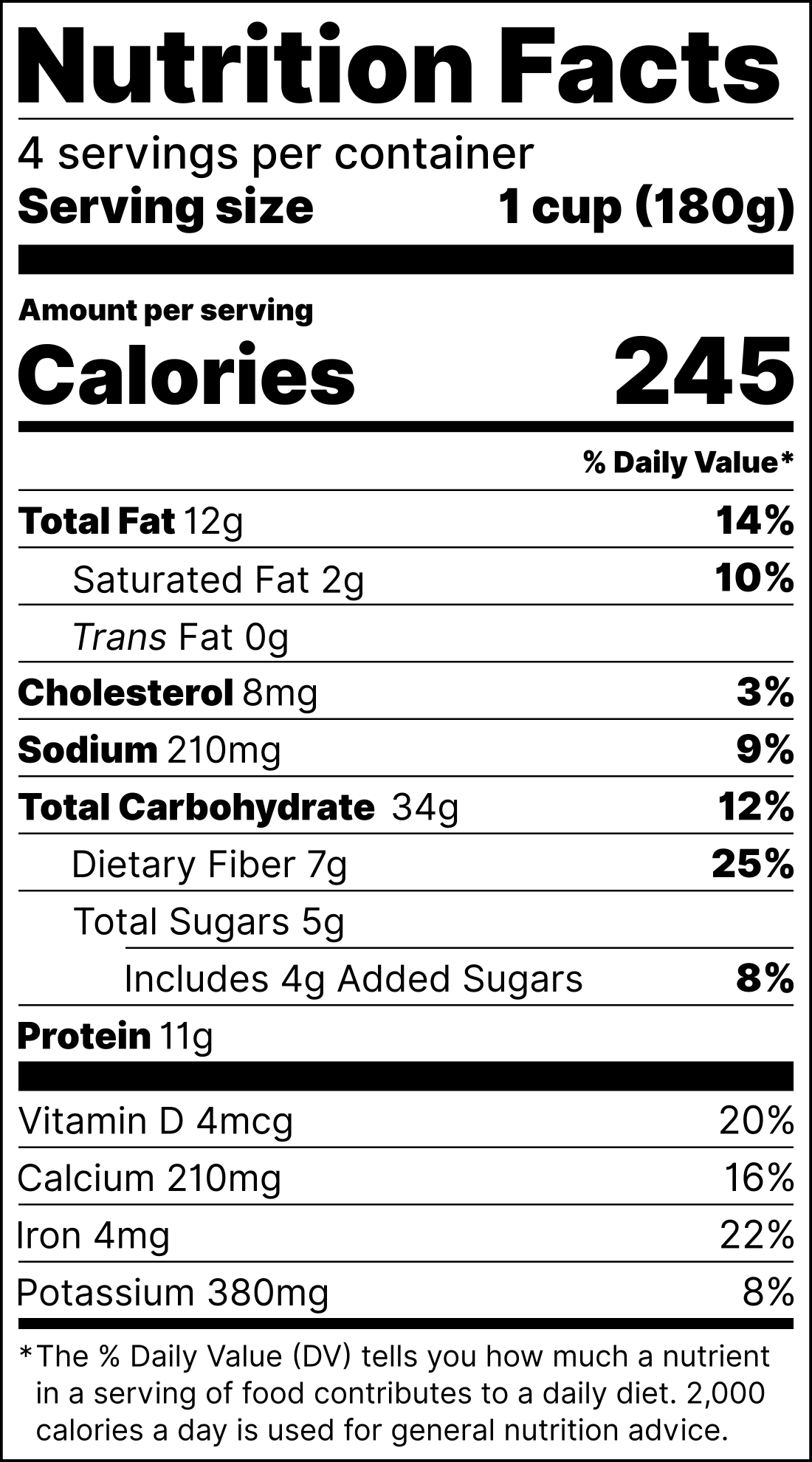
Step 1: Confirm the serving size.
A serving of this food is 1 cup.
Step 2: Find the total carbs in 1 serving.
The total carbs for 1 serving is 34 grams. This means that 1 cup of this food has 34 grams of carbs.
Step 3: Calculate carbs for your portion size.
This is where the math comes in. The total carbs depend on your portion size, or how much you actually ate. Here are 3 examples:
| Portion size | How to calculate carbs for your portion size |
|---|---|
| If you ate 1 cup | 1 cup has 34 grams of carbs (1 serving x 34 grams = 34 grams). In this example, you ate 34 grams of carbs. |
| If you ate 1/2 cup | ½ cup has 17 grams of carbs (0.5 servings x 34 grams = 17 grams) because 1 serving has 34 grams and you ate half a serving. In this example, you ate 17 grams of carbs. |
| If you ate 2 cups | Eating 2 cups has 68 grams carbs (2 servings x 34 grams = 68 grams) because 1 serving has 34 grams and you ate 2 servings. In this example, you ate 68 grams of carbs. |
Other tools for counting carbs
Not all foods come with food labels. What should you do when you eat something without a label?
You can do a quick search on your phone for carb counts in common foods or restaurants. Other common resources include:
- Carb counting apps or digital food logs
- Food databases, like the USDA Food composition database
- Books with carbohydrate counts
- Nutrition information in recipes
You might be happy to learn that there are shortcuts to finding carb amounts for some foods. Here’s a quick carb guide for common foods.
Practice, practice, practice!
Carb counting will become easier and more natural for you over time. As you continue to make these changes, you should see results with your blood sugar readings.
As a next step, practice calculating the amount of carbs in the last meal. For help building a carb counting habit, tell your loved ones about your plans. They can support you.
Always feel free to reach out to your healthcare team with any questions. Your Progyny Care Advocate is also here for you.
Disclaimer: The information provided by Progyny is for educational purposes only and is not medical advice. Always consult a qualified healthcare provider for medical guidance.