Written by the Progyny Editorial Team. Reviewed by the Progyny Clinical Team — November 2025.
With gestational diabetes, your number one goal is to keep your blood sugar within your target range. But, how do you know if you’re meeting this goal?
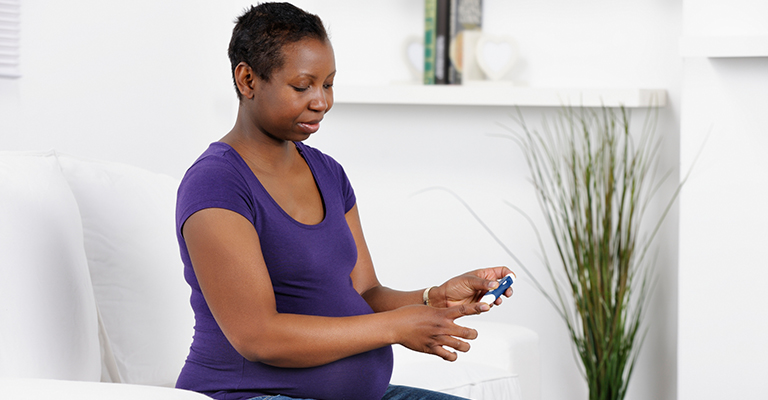
The key is blood sugar monitoring (also called blood glucose monitoring). With this, you’ll use a blood glucose meter to check your blood sugar at different times of the day.
A blood glucose meter is a small device that lets you measure your blood sugar anytime, anywhere. Your results will help you learn what affects your blood sugar, helping you make changes to your everyday routines to reach your blood sugar goals.
Benefits of blood sugar monitoring
Blood sugar monitoring lets you know what your blood sugar is at a point in time. It also helps you:
- Identify patterns based on eating, exercise, and other factors that can affect your blood sugar
- See how your care plan is working
- Make lifestyle changes to stay on track
- Correct high or low blood sugar
- Know if you need to call your doctor
What affects your blood sugar?
You might be surprised to learn how many things can affect blood sugar. And when you track your blood sugar results over time, you can identify the factors that have the biggest effect for you. That knowledge will be so helpful in reaching your blood sugar goals.
High blood sugar
High blood sugar may be caused by several things you CAN control. For example:
- Eating too many carbohydrates
- Sweets and desserts
- Sweetened beverages (juice, soda, sweet tea, sweetened coffee, sports drinks)
- Dehydration
- Caffeine (for some people)
However, your blood sugar may also go up because of things you can NOT control, such as:
- Stress
- Lack of sleep
- Illness, infection, allergies
- Certain medicines (like steroids)
- Dawn phenomenon (early-morning rise in blood sugar)
If you notice that any of these affects your blood sugar, please talk with your doctor to come up with a plan.
Low blood sugar
Your blood sugar may drop too low because of factors like:
- Skipping or delaying meals/snacks
- Going long hours without eating
- Caffeine (for some people)
- Alcohol (avoid during pregnancy)
- Exercise or prolonged physical activity
- Diabetes medicine, including insulin (if taking)
Everyone is different—you might notice some of these affect you, and others don’t. Be sure to talk with your doctor or diabetes educator if you have questions about what might be making your blood sugar levels go up or down.
When should I check my blood sugar?
If you haven’t already, confirm with your care team what your target levels are and when to check your blood sugar.
The American Diabetes Association (ADA) recommends that most people with gestational diabetes check blood sugar 4 times a day:
- Once in the morning (fasting)
- 1 to 2 hours after each meal
The ADA recommends these blood sugar targets for many people. Be sure to find out what’s recommended for you, since your goals may be different.
| When | Target (not treated with insulin) | Target (treated with insulin) |
|---|---|---|
| Fasting and before meals | Below 95 mg/dL | 70 to 95 mg/dL |
| 1 hour after meals | Below 140 mg/dL | 110 to 140 mg/dL |
| 2 hours after meals | Below 120 mg/dL | 100 to 120 mg/dL |
Some people may use a device called a continuous glucose monitor, a wearable device that measures blood sugar throughout the day and night. If you have one, talk with your doctor about what to expect and how to use it.
Putting your results into action
Knowing what affects your blood sugar can help you come up with a plan to manage it.
If your numbers are out-of-range, review the factors that raise or lower blood sugar. Could any of them be the cause for you?
To find patterns over time, try logging your meals, exercise, medicine, and anything else that might be affecting you. Review this with your doctor or diabetes educator at your next visit.
Example: How food affects blood sugar
To learn how different foods change your blood sugar, look at your blood sugar reading 1 to 2 hours after a meal to see if it’s in-range or out-of-range. This will tell you if you ate the right amount of carbohydrates at that meal.
Here’s an example:
| What | Time | Result |
| Fasting blood sugar check | 7:30 am | 86 mg/dL |
| Breakfast – 65 g carbs | 7:30 am | — |
| After-meal blood sugar check | 9:30 am | 147 mg/dL |
Since the blood sugar after breakfast is too high, this means the amount of carbohydrates (65 g) was too much and led to a high blood sugar reading after the meal. This person should eat fewer carbohydrates at their next meal and check their blood sugar 1 to 2 hours afterwards to see if that change helped them reach their goal.
Example: How exercise affects blood sugar
To learn how exercise can change your blood sugar, check your blood sugar before and after physical activity.
Here’s an example:
Imagine someone notices their blood sugar is still high 1 hour after lunch. The next day, they might take a 1-hour walk after eating to see if it lowers their blood sugar.
| What | Time | Result |
| Before-exercise blood sugar check | 1:00 pm | 142 mg/dL |
| Walk (1 hour) | 1:00 pm | — |
| After-exercise blood sugar check | 2:00 pm | 112 mg/dL |
The blood sugar before the walk is high, but the blood sugar after the walk is on target. This means that the 1-hour walk was effective in lowering blood sugar — by 30 blood sugar points!
This can be powerful information if you want to lower your blood sugar with a walk or other exercise in the future. However, if you’re also taking diabetes medicine (like insulin), it is possible to lower your blood sugar too much with exercise, resulting in low blood sugar. Knowing how much an activity lowers your blood sugar can help you avoid this.
Your blood sugars may change over pregnancy
Blood sugar can change as your pregnancy goes on. As you get closer to your delivery date, your blood sugar might increase. This happens because the body makes more pregnancy hormones in the 2nd and 3rd trimesters.
And this is why it’s so important to continue to monitor your blood sugar throughout your pregnancy — to catch these changes early.
For some people, eating or physical activity changes can help them reach their blood sugar goals.
Others might find that what worked for them at the start of their pregnancy no longer works closer to the end. They may need help from insulin or other medicine to bring their blood sugar down. If this happens, it does NOT mean that they have done anything wrong. It just means that their body needs extra help.
Work with your care team
Blood sugar monitoring will help you uncover changes quickly and take prompt action.
Let your doctor and diabetes educator know what you’re seeing with your blood sugar. They can help you stay on-track with targeted changes to your meals and physical activity. Your Progyny Care Advocate is also here to help answer your questions.
Disclaimer: The information provided by Progyny is for educational purposes only and is not medical advice. Always consult a qualified healthcare provider for medical guidance.