
Updated by the Progyny Clinical Team — December 2025.
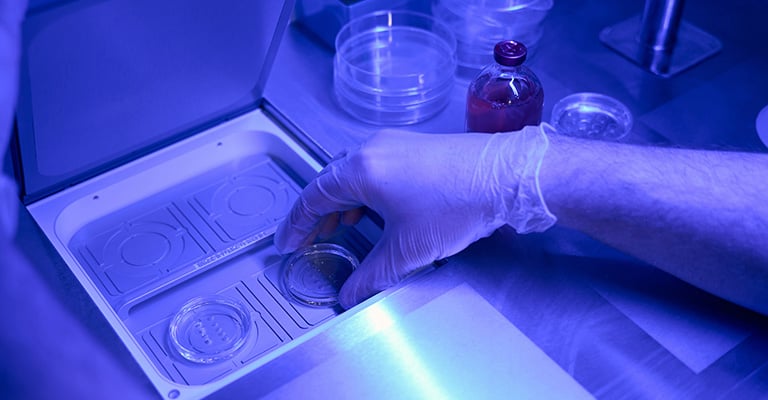
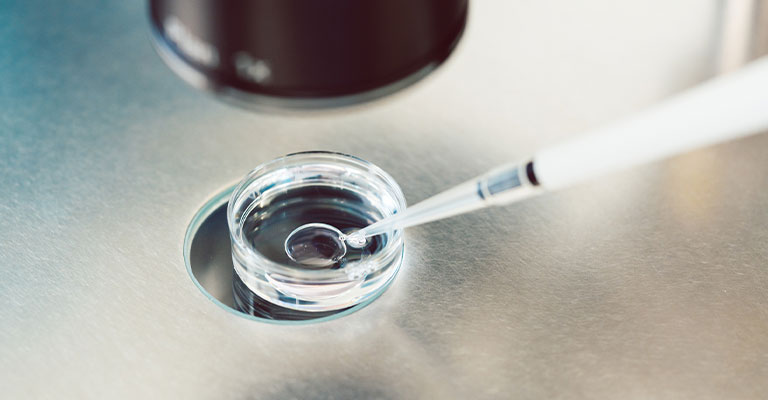
After egg retrieval, the eggs are fertilized in a lab to create embryos. These embryos may be frozen or transferred soon after retrieval. You make take medicine before and after the procedure to prepare for a transfer. Here’s what you can expect.
For a medicated frozen embryo transfer
Medicines before transfer
1. Medicine to prevent premature ovulation
Your healthcare provider may prescribe birth control pills and a medicine called leuprolide (Lupron). These help prevent early ovulation by blocking the hormone surge that triggers it. Leuprolide is usually started 10 to 15 days before starting other medicines for the transfer. Your doctor may stop leuprolide when you start taking other medicines for the transfer, or they may lower the dose.
2. Medicine to prepare your uterine lining
After about 1 to 2 weeks of taking medicine to control ovulation, and once you get your period, you may begin taking estradiol. This can be a pill, patch, or injection. Estradiol helps thicken the uterine lining so it can support an embryo. Estradiol also prevents your body from growing a follicle (small, fluid-filled sac in the ovary) and ovulating.
Medicines during and after transfer
1. Medicine to support implantation
When your uterine lining is thick enough, usually around 1 to 2 weeks after starting estradiol in a medicated transfer cycle, you will begin receiving progesterone. Progesterone can be given as an injection, a vaginal suppository, or both. Examples include progesterone in oil, Endometrin, Crinone, and Prometrium.
The transfer usually happens 3 to 6 days after you start progesterone. If you become pregnant after the transfer, you may continue progesterone for the first 8 to 12 weeks of pregnancy. Your provider will guide the plan based on your history.
Most providers will have you continue the estradiol medicines while you are on progesterone. Some people are also prescribed a short course of a steroid medicine like methylprednisolone (Medrol) or prednisone to support implantation.
Some clinics also prescribe an antibiotic to lower the risk of infection after transfer, such as doxycycline or clindamycin.
For a fresh embryo transfer
1. Medicine to prepare the uterine lining
You may take synthetic estrogen, such as estradiol tablets (Estrace) or patches (Minivelle, Dotti). Estrogen helps thicken the uterine lining for transfer. Your provider will monitor the lining during your cycle. The goal thickness is usually about 7 to 13 millimeters.
Not everyone doing a fresh transfer needs added estrogen. Your provider will determine if more support is needed after retrieval.
2. Medicine to support implantation
You will begin progesterone 1 to 2 days after egg retrieval. Progesterone can be a vaginal suppository or an injection. It helps the uterine lining shift from growing to compacting, which creates a supportive environment for implantation.
If you become pregnant, you may continue progesterone for the first 8 to 12 weeks of pregnancy, based on your history and your provider’s plan.
Some clinics also prescribe an antibiotic to lower the risk of infection after transfer, such as doxycycline or clindamycin.
If you have questions, Progyny is here for you. Please contact your Progyny Care Advocate for support.
Disclaimer: The information provided by Progyny is for educational purposes only and is not medical advice. Always consult a qualified healthcare provider for medical guidance.