Written by the Progyny Editorial Team. Reviewed by the Progyny Clinical Team — November 2025.
During pregnancy, you and your baby are at higher risk for foodborne illness (food poisoning). Your immune system might have a harder time fighting infections caused by bacteria and other microorganisms. And your baby can be infected even if you don’t feel sick.
Let’s go over tips to help you stay safe.
1. Keep it clean
Handwashing is the simplest and most effective way to avoid spreading germs and getting sick. You know the drill…
- Use warm, soapy water and lather for at least 20 seconds
- Scrub under your nails and between your fingers
- Rinse your hands well and dry with a clean towel
Wash your hands…
- Before eating or preparing food
- After handling raw meat, fish, seafood, poultry, and eggs
- After using the bathroom, changing a diaper, or touching dirty surfaces or pets
- After coughing, sneezing, or touching your face
- After being around a sick person
Also keep kitchen surfaces clean. Use hot, soapy water or disinfectant to clean counters, cutting boards, knives, and other utensils.
2. Avoid cross-contamination
Cross-contamination is when bacteria, viruses, dirt, or other microorganisms move from one food or surface to another.
It’s a big concern with raw meat, fish, seafood, poultry, and eggs. These raw foods can have bacteria.
These tips help avoid cross-contamination:
- Wash your hands before and after handling raw foods.
- Don’t use the same cutting board for raw and cooked foods.
- If a plate or utensil touches raw food, do not re-use it for cooked food.
- Don’t let the juice from raw foods or their packages drip on other surfaces.
- Use hot, soapy water or disinfectant to clean surfaces touched by raw food.
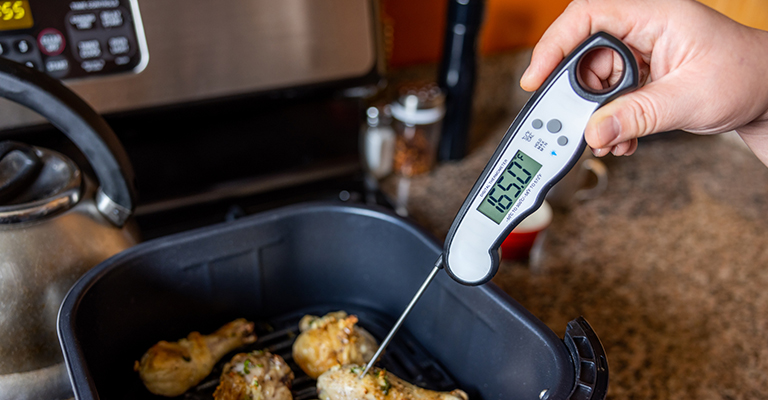
- Wash the meat thermometer with hot, soapy water after every temperature check.
3. Beware the danger zone
Did you know there is a temperature range where bacteria in food can thrive and grow quickly?
That danger zone is between 40 and 140°F. (Keep in mind that room temperature is 68 to 72°F.) When food is left out too long, bacteria grow quickly. They can double in just 20 minutes. Ick!
Follow these guidelines for serving food safely:
- Cold food: Keep at 40°F or below
- Hot food: Keep at 140°F or above
- Frozen food: Keep at 0°F
What to do with leftovers:
- Throw away food that has been out of the fridge for over 2 hours.
- Hot day? Throw away food after 1 hour if it’s 90°F or hotter outside.
- Help cool food quickly in the fridge by dividing it into small containers or cut up large items (like roasts).
- It’s OK to put hot food directly in the fridge.
- Most leftovers can be stored in the fridge for 3 to 4 days.
- Most frozen foods can be stored for 3 to 4 months.
4. Remember, it’s the inside that counts
Cook all leftovers and raw meat, fish, seafood, poultry, and eggs to a safe minimum internal temperature.
Use a food or meat thermometer to be sure you’ve reached these temperatures:
| Food category | Minimum temperature |
|---|---|
|
165°F |
|
160°F |
|
145°F |
|
135°F |
What foods should I avoid?
In addition to food safety, it’s important to know which foods are more likely to carry harmful bacteria. Check out:
If you have any questions about a healthy pregnancy lifestyle, reach out to your Progyny Care Advocate any time. We’re here for you!
Disclaimer: The information provided by Progyny is for educational purposes only and is not medical advice. Always consult a qualified healthcare provider for medical guidance.