
Written by the Progyny Editorial Team. Reviewed by the Progyny Clinical Team — November 2025.
If you were diagnosed with gestational diabetes, your healthcare provider likely told you to follow a healthy eating plan. But what does healthy eating look like, and why is it important?
Healthy eating will:
- Help keep your blood sugar in your target range
- Help you reach your pregnancy weight goals
- Ensure you and the baby are getting enough nutrition for growth and development
Eating a wide variety of foods during pregnancy (rich in fruits and vegetables, protein, healthy fats, whole grains and fiber) helps make sure you’re getting the nutrition you and your baby need.
It’s also important to avoid skipping meals or going too long without eating—you and your baby need regular, balanced nutrition.
Healthy eating is your greatest tool
Healthy eating is your most powerful tool for managing gestational diabetes. This is because the largest changes in blood sugar happen after you eat. When you eat foods that have carbohydrates (carbs), your body breaks them down into glucose (a type of sugar). This causes blood sugar to rise.
A small rise in blood sugar after a meal is normal and expected. However, when your blood sugar is above your target range too often, it puts both you and baby at risk for complications.
Making small changes to eating habits can go a long way in preventing spikes in blood sugar after meals.
What foods will raise my blood sugar?
Foods can be divided into two categories:
- Those that will raise blood sugar
- Those that won’t raise blood sugar
Food that will raise blood sugar
Foods that will raise blood sugar are foods with carbohydrates, like:
- Fruit and fruit juices
- Starches (breads, pastries, rice, pasta, noodles, cereal, grains, crackers, chips)
- Starchy vegetables (potatoes, corn, sweet potatoes, pumpkin, beans, legumes, lentils, tofu)
- Milk and milk substitutes
- Sweets, desserts, and sweetened beverages
Food that won’t raise blood sugar
Foods that won’t raise blood sugar are foods without carbohydrates, like:
- Protein
- Fat
- Non-starchy vegetables (cucumber, lettuce, tomatoes, bell peppers, mushrooms, carrots, onions)
Carbs are still part of a healthy eating plan
Even though carbs raise blood sugar, it’s important to include them as part of balanced, healthy meals. They provide important energy, vitamins, minerals, and fiber that your growing baby needs. Avoiding or limiting carbohydrates during pregnancy can lead to low blood sugar and possible nutrient deficiencies.
With carbs, choose healthy, high-fiber options.
| ✅ Choose high-fiber carbohydrates like: | ⬇️ Limit processed, low-fiber carbohydrates like: |
|---|---|
|
|
What about protein and fat?
All foods are made up of some combination of protein, fat, and carbohydrates. Although protein and fat don’t raise blood sugar, some protein and fat foods can still have carbohydrates. Think breaded chicken covered in a sweet sauce, or a sweetened nut butter spread like Nutella® — both are protein or fat foods with added sugar.
When it comes to protein and fat, these guidelines can help you make great choices:
Protein
| ✅ Choose lean proteins like: | ⬇️ Limit high-fat proteins like: |
|---|---|
|
|
Fat
| ✅ Choose heart healthy, plant-based fat from: | ⬇️ Limit saturated fat, found in: | 🚫 Avoid trans-fat, found in: |
|---|---|---|
|
|
|
Pro-tip: Including foods high in protein, healthy fats, and fiber at each meal and snack offers 3 great benefits: it provides nutrition for you and your baby, helps you feel full longer, and helps prevent blood sugar spikes.
The balanced plate method for healthy eating
Choosing the right amount of carbohydrates in your meals and snacks (not too much and not too little) will help your blood sugar stay in your target range.
The balanced plate method is a great way to focus on small, simple changes for healthy eating. It will help you get enough protein and vegetables (full of nutrition for a growing baby). It also makes sure there aren’t too many carbohydrates on your plate that can cause large spikes in blood sugar after your meals.
Here’s how it works:
- Start with a 9-inch plate (a salad or lunch plate, not a dinner plate)
- Divide it into 4 sections, with:
- ½ plate for non-starchy vegetables
- ¼ plate protein
- ¼ plate carbohydrates
- Add water or a zero-calorie drink
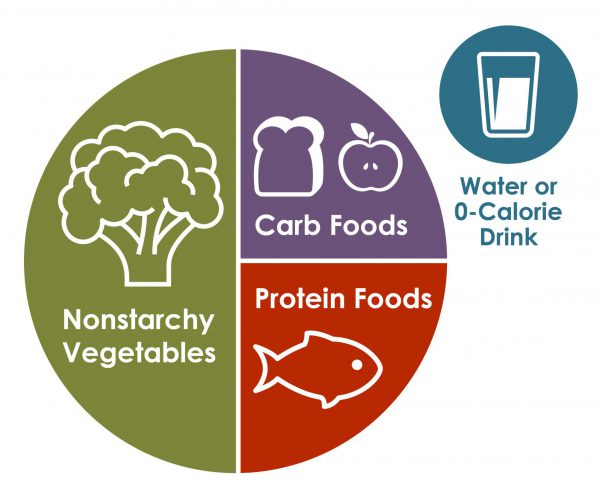
Pro-tip: Place the vegetables on your plate first, followed by protein, and then carbohydrates last. This way, you won’t add too many carbs to your plate.
Extra pro-tip: Eat in that same order: vegetables, protein, and then carbohydrates. Eating high fiber and protein foods before carbohydrate foods can lead to lower blood sugars after a meal or snack, and will help fill you up.
Other methods for balancing carbs
You and your healthcare team may discuss other tools to help you balance your carbs. Be sure to talk with your team, and refer to these resources to learn more:
- Monitoring your blood sugar before and after meals can help you see how different foods affect you
- Carb counting and reading food labels can give you a precise way to measure how many carbs you eat
Your team is here to help you
Small changes will be a big help in managing your blood sugar and having a healthy pregnancy — and you don’t need to do this alone!
Your doctor will monitor your blood sugar throughout your pregnancy. Bring your blood sugar and food logs to your medical visits so you and your doctor and/or diabetes educator can track the trends and patterns you’re seeing.
You can also reach out to your Progyny Care Advocate with questions. We’re here for you.
Disclaimer: The information provided by Progyny is for educational purposes only and is not medical advice. Always consult a qualified healthcare provider for medical guidance.