

Hair falling out in the shower. Forgetting a familiar name in the middle of a sentence. Feeling angry, exhausted, or unlike yourself. Waiting years struggling with a variety of distressing changes/symptoms; not getting the proper solutions from the various doctors you do seek help from; taking years before finally seeing a menopause specialist to help you piece it all together.
If any of this sounds familiar, you’re not alone. Perimenopause and menopause can bring changes that feel frustrating, frightening, or difficult to talk about—and it isn’t always easy to know what’s related to menopause or where to turn for help.
In an episode of DocTalk, Dr. Janet Choi, Chief Medical Officer at Progyny, and Lissa Kline, LCSW, Senior Vice President of Experience at Progyny, discussed questions and experiences shared on Reddit. Here are some of the topics they explored.
The information in this article is for education and awareness only. It is not a substitute for medical advice, diagnosis, or treatment. Talk with your healthcare provider about symptoms or treatment options that may be appropriate for you.
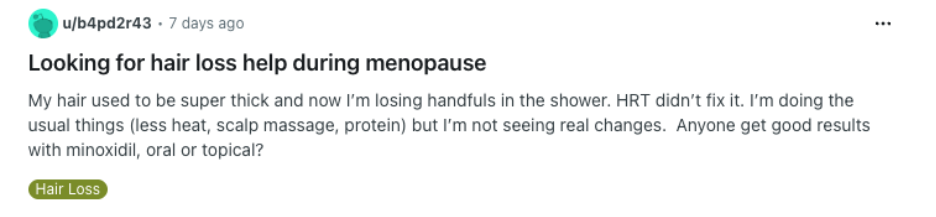
Why is my hair thinning during menopause, and what can I do about it?
Hair loss can be a common part of perimenopause and menopause—but hormones aren’t always the only cause. Thyroid issues, anemia, and not getting enough nutrients can also play a role.
The Reddit post discussed in the episode came from someone who once had thick hair but was now losing handfuls in the shower. Menopause hormone therapy hadn’t resolved the problem, and the person wanted to know whether minoxidil might help.
Dr. Choi explains that hair changes (thinning; changes in the hair texture) is a fairly common menopause symptom, even though it isn’t always included in lists of symptoms or reasons to seek care. It can also be especially distressing because hair is closely connected to our identity and how we feel about ourselves.
So, before you reach for an over-the-counter treatment, Dr. Choi recommends talking with your healthcare provider about what might be causing the hair loss. Two areas she specifically suggests checking are thyroid function and anemia.
During perimenopause, some people experience heavier or more unpredictable periods. That blood loss can lead to low iron or anemia, which may contribute to hair loss. Treating the anemia—and understanding what’s causing it—may help reduce the shedding (in addition to supporting improved overall health and energy).
Nutrition may matter, too. Dr. Choi cautions that midlife isn’t the time for severe calorie restriction. If you aren’t getting the nutrients your body needs, that can affect your hair as well as your overall health.
If your thyroid function and iron levels are normal and the hair loss continues, Dr. Choi and Lissa suggest asking your healthcare provider whether it would be helpful to see a dermatologist. A dermatologist can discuss available prescription and over-the-counter options.
Minoxidil came up in the original Reddit question, but Dr. Choi wouldn’t recommend simply picking it up and trying it on your own. Because hair-loss treatments can have side effects, it’s worth talking through the options with a healthcare provider or dermatologist first.
And remember that hair grows in cycles. If you recently started menopause hormone therapy, Dr. Choi says it may take several months—sometimes as long as half a year—to notice whether it’s having an effect.
Is brain fog normal during menopause?
Brain fog is a common experience during perimenopause and menopause, and Dr. Choi says it’s temporary for most people.
One Reddit user described forgetting their eight-year-old daughter’s name in the middle of a sentence. They also reported forgetting a longtime coworker’s name, walking into rooms without remembering why, and frequently losing their train of thought.
Lissa shares that she has experienced moments when she can picture someone’s face but can’t retrieve the person’s name. Dr. Choi describes losing the point she was making while answering a question—even though she had prepared for the conversation and knew the subject well.
Researchers are still working to understand exactly what causes brain fog during the menopause transition. Dr. Choi says it’s likely connected, at least in part, to changes in estrogen and their effects on the brain. These lapses can feel alarming, but Dr. Choi says that, in the vast majority of cases, menopause-related brain fog isn’t a sign of early dementia.
Sleep and nutrition are two areas Dr. Choi and Lissa suggest paying attention to. Sleep can be especially difficult during menopause, and disrupted sleep may make it even harder to think clearly during the day. Additionally, medical conditions which can crop up during midlife—depression/anxiety—can also impact brain fog (and also can improve with treatment for the mood disorder).
You also don’t have to dismiss concerning cognitive changes as “just menopause.” If you’re worried, Dr. Choi and Lissa recommend bringing those changes to a healthcare provider—ideally one with menopause experience.
Dr. Choi notes that providers can use simple assessment tools to screen cognitive function. That can help determine whether the symptoms seem consistent with temporary brain fog or require additional evaluation.
![Reddit screenshot: I forgot my kid's name mid sentence. Perimenopause brain fog is real I know people mix up names, like my mom called me by my sister's name growing up all the time. But this perimenopause brain fog thing is getting scary Yesterday I literally blanked on my daughter's name mid-sentence. Not even trying to remember it .. was actively talking about her and it just...vanished. I stood there frozen. She's 8 and I just couldn't remember And it's not just her. Forgot a coworker's name in a meeting last week (3 years we've worked together??), constantly losing my train of thought, walking into rooms with zero clue why I'm there. I'm 46 not 80 wtf like is this just what perimenopause is?? anything I can do or do I just... [Remaining text is cut off in the screenshot.] Category: Perimenopause](https://progyny.com/hs-fs/hubfs/undefined-Oct-15-2026-04-42-53-9306-PM.png?width=936&height=294&name=undefined-Oct-15-2026-04-42-53-9306-PM.png)
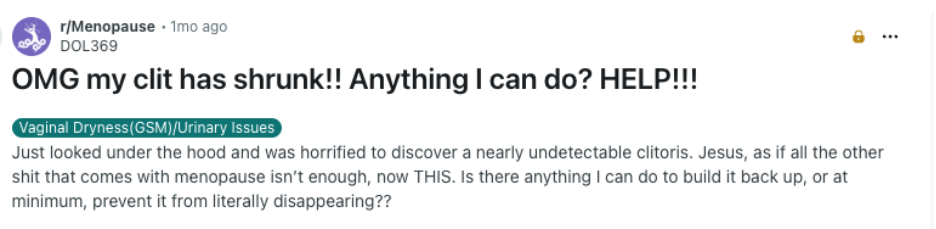
What can I do about genital and clitoral changes during menopause?
Declining estrogen can affect the vagina, vulva, bladder, and surrounding genital tissue. Dr. Choi explains that these changes can be part of genitourinary syndrome of menopause.
The Reddit question discussed in the episode came from someone who was distressed to discover that their clitoris appeared to have become much smaller. They wanted to know whether it was possible to restore it or prevent further changes.
Although changes to the clitoris aren’t discussed nearly as often as hot flashes or vaginal dryness, Dr. Choi explains that they can occur alongside these broader changes. Symptoms can include vaginal dryness, tightness and pain, bladder irritation, bladder pain, and more frequent urinary tract infections.
Dr. Choi discusses low-dose vaginal estrogen as one treatment that may help people experiencing vaginal tightness, atrophy, dryness, or pain. She says it might also have a positive effect on clitoral tissue, while being careful to note that she can’t say that for certain.
The episode also addresses testosterone. Dr. Choi cautions against obtaining testosterone from an unqualified provider or wellness clinic. She explains that a qualified healthcare provider should review your health history, symptoms, potential benefits, and possible side effects before recommending it.
The takeaway from Dr. Choi: Don’t be embarrassed to bring genital or clitoral changes up with a qualified healthcare provider. They can help you understand what’s happening and talk through the options that may be appropriate for you.
Why do I feel so angry and unmotivated during menopause?
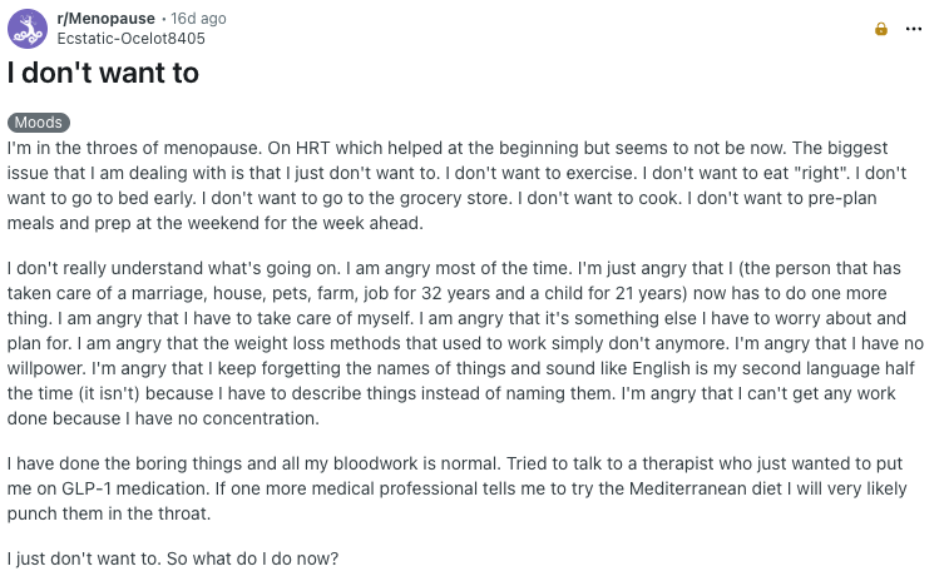
Anger, exhaustion, and feeling resistant to another self-care task can be part of menopause—not a sign of weak willpower.
One Reddit user put it bluntly: After decades of caring for a marriage, home, pets, farm, job, and child, they were angry that taking care of themselves had become one more responsibility.
They didn’t want to exercise, plan meals, cook, shop for groceries, or go to bed early. They were also struggling with weight changes, concentration, word retrieval, and the feeling that strategies that had worked earlier in life no longer worked.
Lissa says this experience reflects what many people feel during midlife but may be hesitant to express so openly. She recommends looking for a therapist who understands menopause or midlife—and notes that finding the right therapist may take more than one attempt.
She also highlights the value of community. Online communities, support groups, and conversations with people going through similar experiences can help normalize what you’re feeling and provide practical support.
Dr. Choi explains that mood disorders may first appear or return during the menopause transition. She specifically mentions depression, anxiety, and increased suicidal ideation as reasons mental health should be taken seriously during this stage of life.
If anger has become the dominant feeling throughout most days—even while you’re using menopause hormone therapy or trying other approaches—Dr. Choi recommends discussing it with a trusted healthcare provider or an advocate with women’s health experience. That might be a menopause provider, gynecologist, primary care provider, or, for Progyny members, a Progyny Care Advocate (PCA).
Depending on the individual, support might include therapy, group sessions, medication, or a combination of approaches. Dr. Choi notes that some selective serotonin reuptake inhibitors used to treat mood symptoms may also help with certain menopause symptoms, including vasomotor symptoms such as hot flashes.
Dr. Choi and Lissa also encourage the Reddit user to ask their partner and adult child for help. After carrying so much for so long, they shouldn’t have to keep doing everything alone.
Why does it take so long to see a menopause specialist?
One reason for long waits may be that there aren’t enough clinicians with specialized perimenopause and menopause training to meet the demand for care.
One Reddit user reported waiting three years for an appointment at a menopause clinic. Lissa and Dr. Choi acknowledge how difficult it must have been to wait that long while experiencing symptoms without adequate support.
In the episode, Dr. Choi explains that menopause education has historically been limited in many healthcare training programs, leaving fewer providers with specialized expertise.
People often first turn to the OB-GYN who has provided their routine reproductive healthcare. But Dr. Choi cites research suggesting that only a minority of U.S. OB-GYN residency programs offer menopause training. She says the percentage is even lower among internal medicine and family medicine residency programs. As a result, clinicians who want to specialize in menopause may need to pursue additional education after completing their residency.
When seeking care, Dr. Choi recommends looking for a qualified menopause provider who has completed additional training. Ideally, that may be someone certified by The Menopause Society or someone trained through a program that follows current, evidence-based menopause guidelines.
And good menopause care should be about more than simply receiving a prescription. Dr. Choi emphasizes the importance of meeting with a provider who understands your symptoms, reviews your health history, and discusses appropriate options with you.
Lissa notes that Progyny members can access menopause support without facing a multi-year wait. Members can connect with a PCA for help navigating available care and resources.

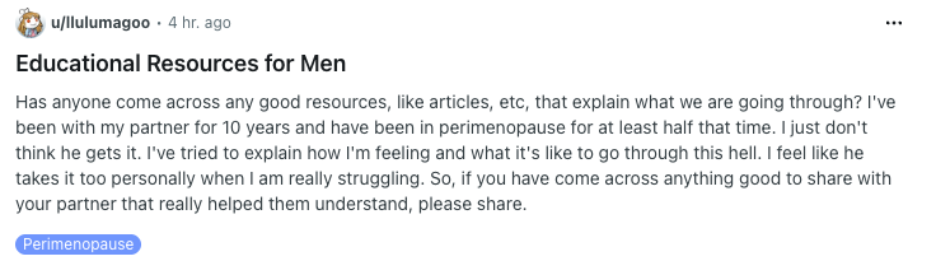
How can partners better understand and support someone going through menopause?
Partners can help by learning about perimenopause and menopause, listening without minimizing the experience, and taking on more of the day-to-day load.
During the conversation about anger and motivation, Dr. Choi and Lissa encourage people experiencing menopause to lean on their partners, families, and communities.
Lissa points out that someone who has spent decades managing a home and caring for others can ask a partner or adult child to take on more responsibility. That begins with saying clearly what’s happening and acknowledging that handling everything alone is no longer sustainable.
Your partner may not immediately understand how much menopause can affect sleep, mood, memory, sexual health, energy, and everyday life. Learning about these changes together can help them respond with more understanding—and less dismissal.
Dr. Choi and Lissa suggest directing partners and other allies to credible menopause information. They mention the patient-education resources available from The Menopause Society, as well as educational podcasts led by healthcare providers who specialize in menopause.
For Progyny members and their partners, a PCA can also help provide information and connect them with available support.
Partners don’t need to have all the answers. Listening, learning, and helping carry the load can make the experience feel much less isolating.
You don't have to navigate menopause alone
Menopause can affect a lot more than periods and hot flashes. It can change your hair, memory, concentration, mood, genital and urinary health, relationships, and everyday quality of life.
You don’t have to figure it all out alone. Dr. Choi and Lissa’s central message is simple: Talk about what you’re experiencing, seek care from a qualified provider, and ask for help when you need it.
Watch the full conversation and explore more episodes of DocTalk for expert perspectives on women’s health, family building, and what today’s headlines may mean for you.